This year, there was a new law that banned phones during class time in schools. Opinions varied, as some viewed the law as beneficial to boosting the learning of students, while others saw it as an annoying hindrance. A large debate around the ban is whether it was enforced effectively or not.
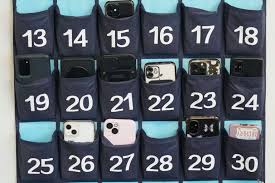
In part, it was. Many teachers hang the numbered phone pouches in their rooms and make kids put them in for instructional time or even the entire class, which is more effective than the alternative of teachers only making students keep them out of sight in a backpack or pocket. Both of these have their flaws. Making students keep them in a pouch isn’t effective because students could easily just not listen and lie , which is why many teachers will make students keep their phone in the pouch number equivalent to their seat number. But, if there is no seating chart, kids could potentially change seats everyday, unraveling this system.
Teachers without the pouches had to opt for trusting kids to keep their phones stored out of sight. Most kids have little to no issue staying focused and off their phones, but there will always be those who use them anyway and cause problems for the rest of the classroom. Teachers will have to stop class time to tell them to put it away because it is technically not legal.
An objection made to this ban could be made off of this point. If not all teachers have pouches or an effective way to conceal phones, this can be hard to enforce. Some students then sneak glances at their phones, mostly to no avail. Then teachers have to stop the action, taking away from students’ learning time. This does the opposite of what the ban aimed to do, which was to improve educational time, therefore, hindering students’ education.
As this school year has progressed, some students may have grown more bold with how they use their phone in class. They may do it more often and are less secretive about it. The more that students use their phones, the more arduous it becomes for teachers to stop them. Teachers don’t want their students on their phones because they aren’t learning and listening, but also don’t want to chip away more at the limited time they have in class for learning, which was cut down more by block scheduling. This can become a double edged sword for some teachers.
In its entirety, the phone ban may have not changed much, as students still use phones when they aren’t supposed to. This dilemma is tough to solve because, no matter how it is approached, there will be a problem. There will always be objections from all sides of the argument. Though the ban did not change much this year, next year is to be seen as the administrators will likely reflect on the trials and tribulations of this year to fix the problems.