
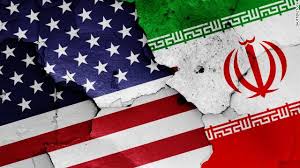
On February 28, 2026, the United States and Israel launched an attack on the Islamic Republic of Iran. Ali Khamenei, the Supreme Leader of Iran, was killed on the first day of the conflict, according to NDTV. According to the same source, dozens of other Iranian regime and military leaders have been killed as well, fragmenting the regime’s chain of command. The BBC reported that at least 11 Iranian naval vessels have been destroyed. Furthermore, according to a senior Israeli military official, cited by the Institute for the Study of the War, Israel has put up to 290 of Iran’s ballistic missile launchers out of service, out of an estimated 410 to 440 launchers. The U.S. military and Israeli Defense Forces retain air superiority over Iran as well.
However, the success of the wider operation seems to remain in jeopardy due to one critical question: what’s next?
President Donald Trump has been inconsistent on the issue. He told NBC that the operation was a “major combat operation” and that strikes are “ramping up” on March 13. Two days earlier, however, Trump told the same source that, “We won. The first hour, it was over.” On March 17, Trump stated that the U.S. would be “leaving [the conflict] in pretty much the very near future.” The question must be asked: which is it? Is the war already over, or has it just begun?
The Trump administration has been reluctant to provide an answer. It has, however, been consistent about one insistence: that Iran must never have a nuclear weapon, according to Reuters.
The Council on Foreign Relations provides a justification for this insistence, stating that “Many foreign policy experts warn that a nuclear-armed Iran would be an acute threat to Israel and pose a major challenge to the interests of the United States and its partners in the Middle East. Some regional analysts fear that a nuclear-armed Iran would likely be emboldened to pursue a more aggressive foreign policy, not only in the region but via its growing military and economic partnerships with U.S. rivals China and Russia.”
Considering these grave consequences, it is no surprise that the Trump administration would rather prevent them. That would suggest that a longer conflict will be necessary, however, because the Center for International and Strategic Studies found that, “Iran still maintains a stockpile of 440.9 kg of 60% enriched uranium stored in several clandestine facilities.” It states that airstrikes alone, in spite of their power, are not sufficient to destroy such a well-protected asset. Furthermore, the article states that “in a ‘dash’ scenario, Iran could theoretically fashion 440.9 kg of 60% [enrichment] into several crude nuclear devices,” though it would require conversion facilities that “Iran does not currently possess.”
The threat remains, however, especially if the conflict does turn out to be a short one. So long as Iran’s nuclear stockpile survives, so too does its nuclear weapons program. How should the U.S. deal with this? One possibility proposed by the CSIS is an operation to retrieve the nuclear material. This would require “breach[ing] Iran’s underground facilities, and doing so would require establishing security perimeters at each facility.” In other words, it would require U.S. boots on the ground, something that would escalate this conflict even further.
Based on his comments to the media, Trump is currently weighing two options: exit the conflict soon, or escalate further. In the first scenario, Iran would retain its nuclear stockpile and therefore ability to eventually construct nuclear weapons. One of the U.S.’s primary objectives would, therefore, go unfulfilled. Whether or not the havoc wrecked on the Islamic Republic’s leadership and military was worth the cost or not would be difficult to discern, but the regime would remain intact, as would its nuclear ambitions.
The other possibility is a full commitment by the U.S. and Israel. In the view of the Trump administration, this would destroy the Islamic Republic and replace it with a Western-friendly and democratic Iran in the spirit of its protests earlier this year, which were brutally put down with, according to the Human Rights Activists News Agency, more than 6,000 dead and more than 17,000 more recorded deaths under investigation, giving a possible total of about 23,000. Iran’s nuclear ambitions would be destroyed, eliminating one of the major threats to U.S. security in the Middle East.
That, however, would require destroying the Islamic Republic, something that Trump has yet to commit to. According to Brookings, President Trump loudly proclaimed support for the protestors during the January protests, tweeting things like “help is on the way,” encouraging them to take over government institutions. Tweets are not legislation or action, however, and help failed to materialize. The U.S. did not, for example, attempt to arm said protestors. By the time the war began on February 28, Trump seemed to have moved on. Then, on March 3, CNN reported that “the CIA is working to arm Kurdish forces with the aim of fomenting a popular uprising in Iran.” According to the same source, the Kurdish forces were intended to occupy Iranian security units to allow Iranian opposition to overthrow the regime. Whether this plan will be put into action is yet to be seen, but questions remain.
For example, Jen Gavito, a former senior State Department official specializing in the Middle East under former President Joe Biden, said that she is concerned about whether the implications of arming the Kurds have been fully considered.
“We are already facing a volatile security situation, on both sides of the border,” Gavito told CNN. “This has the potential to undermine Iraqi sovereignty and essentially empower armed militias with no accountability and with little understanding of what it may set in motion.”
Even if the Kurdish forces were to succeed and the Islamic Republic were to be overthrown, the nuclear question would remain unresolved. In fact, the CSIS has more to say on the issue: “If the central government in Iran collapses, this material may fall into the hands of non-state actors or rogue military factions in Iran.”
Based on the CSIS’s analysis, safe treatment of the nuclear issue would seem to require direct US support on the ground in Iran. Whether or not the Trump administration is ready for such an escalation, however, is unclear. Whichever way the U.S. steps, threatening questions lie. If the conflict ends soon, the Islamic Republic may eventually recover, undoing the impact of the ongoing conflict. If it does not, the U.S. may be drawn into a long, hazardous conflict that it could struggle to resolve.






Phillip H. • Mar 26, 2026 at 2:33 PM
This is an intelligent summary of what is going on with our invasion of Iran, noting the consequences of ending the war quickly or continuing and escalating the conflict.
A good read.