
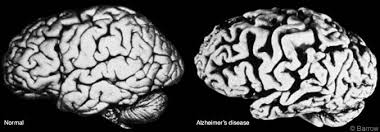
Alzheimer’s disease, more commonly known as AD, is caused by an excessive accumulation of proteins in and around brain cells. Alzheimer’s is a severe form of dementia primarily affecting older adults that declines memory and thought process skills. Individuals with Alzheimer’s disease have shortened livespans, typically ranging from 3 to 11 years after diagnosis. Since its discovery, researchers have unsuccessfully attempted to find a cure; however, a recent study from Case Western Reserve University has shown a potential solution for Alzheimer’s.
“The study, led by Kalyani Chaubey, from the Pieper Laboratory, was published online December 22nd in Cell Reports Medicine,” Bill Lubinger, a newspaper journalist at Case Western Reserve University, said. “Using diverse preclinical mouse models and analysis of human AD brains, the team showed that the brain’s failure to maintain normal levels of a central cellular energy molecule, NAD+ [Nicotinamide Adenine Dinucleotide], is a major driver of AD, and that maintaining proper NAD+ balance can prevent and even reverse the disease.”
Cells require NAD+ in order to function properly, so insufficient levels of NAD+ can contribute to Alzheimer’s disease.
“After finding that NAD+ levels in the brain declined precipitously in both human and mouse AD, the research team tested whether preventing loss of brain NAD+ balance before disease onset or restoring brain NAD+ balance after significant disease progression could prevent or reverse AD, respectively,” Lubinger said. “Remarkably, not only did preserving NAD+ balance protect mice from developing AD, but delayed treatment in mice with advanced disease also enabled the brain to fix the major pathological events driven by the disease-causing genetic mutations.”
Similarly to the mice used in the experiment, if NAD+ is increased in humans with Alzheimer’s disease, it could be treated.
“Through our study, we demonstrated one drug-based way to accomplish [NAD+ regulation] in animal models, and also identified candidate proteins in the human AD brain that may relate to the ability to reverse AD,” Kalyani Chaubey said.
This method could be applied to human patients with Alzheimer’s in order to cure their disease. Numerous people have suffered from Alzheimer’s disease for several years, but Case Western Reserve University’s recent study creates hope for a treatment.