
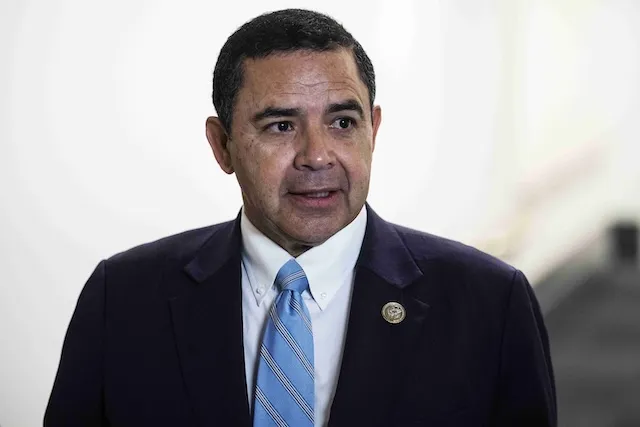
Henry Cuellar has been serving as a U.S. representative for Texas’s 28th Congressional District since 2005. He describes himself as a conservative Democrat, and in the 117th Congress, he voted with the Democratic caucus 96.8% of the time.
However, Cuellar has been charged with dozens of crimes,ranging from bribery to money laundering and conspiracy. Cuellar and his wife, Imelda, allegedly accepted nearly $600,000 from two separate bribes from an energy company controlled by the government in Azerbaijan and a Mexican bank.
Cuellar and his wife have been facing this legal battle over the last several years, until President Trump pardoned both of them on December 3. This surprise move, announced by President Trump, has cleared the way for Cuellar to continue his political career, but has also ignited a public debate over political loyalty.
President Trump defended his decision by claiming that the prosecution, which started with the Biden administration, was a weaponized legal attack motivated by Cuellar’s vocal criticism of his own party’s stance on border security.
Shortly after the pardon, Cuellar filed for re-election as a Democrat. This decision got a sharp reaction from President Trump, who quickly posted on social media to criticize the congressman for his “lack of LOYALTY,” because he didn’t switch parties. President Trump suggested that the clemency should have led to a party change to aid the Republican majority in the House of Representatives.
In response to the President’s criticism, Representative Cuellar stated that he is an American, a Texan, and a Democrat, and would continue to work with the administration on common-ground issues like border policy.
The pardon marks an important intervention that has generated great speculation regarding political motivation with the use of Presidential Clemency.